Plastics Recycling

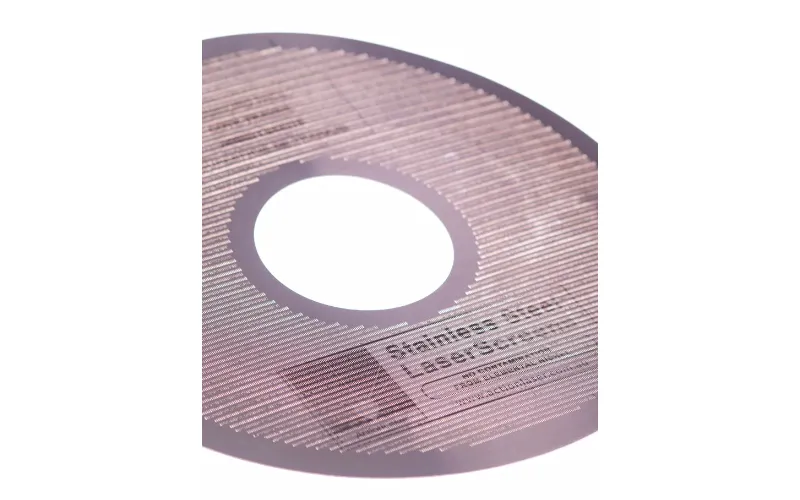
Laser-drilled stainless-steel MeltFilter discs manufactured for controlled melt filtration in high-pressure, high-temperature plastics recycling environments.

The Realities of High-Stress Melt Filtration

Plastics recycling places significant mechanical and thermal demands on filtration systems. Feedstock quality varies, contamination levels fluctuate, and melt behaviour changes as polymers are processed. As pressure and temperature increase, filtration accuracy becomes a controlling factor in overall line stability.

Traditional mesh, wedge-wire, and chrome-nickel filters can struggle under these conditions. As heat and load build, aperture geometry can distort, clogging accelerates, and melt pressure becomes unstable. These variations can disrupt downstream equipment and force frequent process interruptions.

ActionLaser MeltFilter discs are designed to maintain defined aperture geometry under sustained thermal and mechanical load. Laser drilling produces precise, burr-free apertures without introducing forming stress into the material. This dimensional stability supports more predictable melt flow and pressure behaviour in recycling systems where small variations can affect the entire line.

Controlled Aperture Geometry and Melt Pressure Stability

In melt filtration, the actual hole size within a filtration disc directly influences melt pressure, flow rate, and separation behaviour. Variations in aperture geometry across a disc surface can create uneven flow paths, localised pressure build-up, and premature clogging.

ActionLaser MeltFilter discs are laser-drilled to defined specifications rather than standardised nominal sizes. Each disc contains hundreds of thousands of apertures, with geometry controlled during manufacture to support consistent melt distribution across the filtration area.

This approach helps stabilise melt pressure and reduces variability that can propagate through extrusion and pelletising stages.

Verified Hole Size Measurement in Melt Filtration

In many plastics filtration applications, MeltFilter discs are specified by nominal hole size alone. While this provides a reference point, it does not account for variation in actual aperture geometry, hole count, or effective open area across the disc.

When these variables are not measured or verified, filtration behaviour can diverge from expectations. The result is often premature clogging, unstable pressure profiles, and inconsistent separation performance, particularly in applications with variable contamination or tight process tolerances.

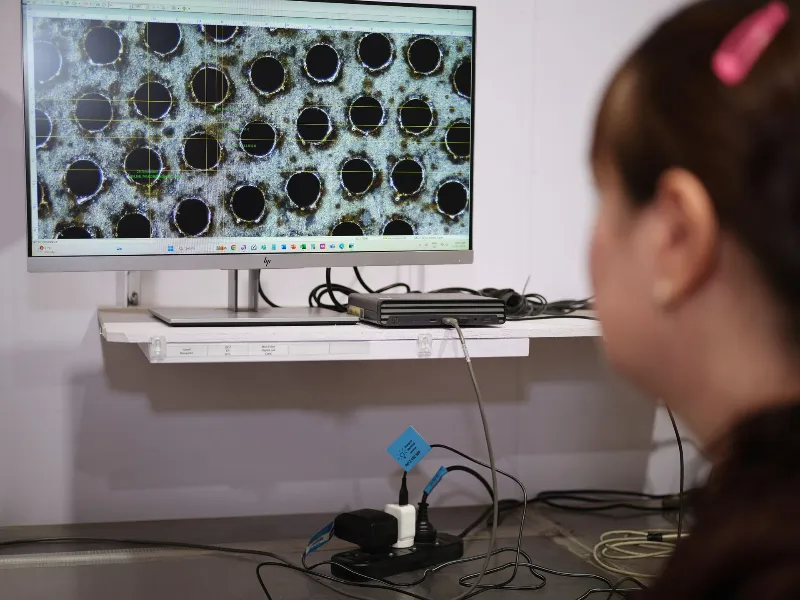
ActionLaser addresses this risk by treating hole size as a measurable characteristic rather than an assumed specification. Aperture geometry is verified at the disc level, allowing filtration performance to be aligned more closely with polymer type, contamination profile, and operating conditions.

Process Transparency for Predictable Melt Filtration Performance

A key differentiator in ActionLaser’s plastics filtration approach is the verification of aperture size distribution. For each MeltFilter disc, a statistically significant proportion of apertures is measured using in-house inspection technology, allowing average hole size and distribution to be quantified for that specific component.

Providing verified hole size data gives processors greater visibility over a critical process variable. When melt behaviour changes, filtration parameters can be adjusted with a clear understanding of the actual aperture geometry in use, rather than relying on nominal or assumed values.

This level of process transparency supports more predictable filtration behaviour in applications where pressure stability, separation accuracy, and process control are closely linked.

Application-Specific Melt Filtration for Plastics Recycling

Plastics recycling systems vary widely depending on polymer type, contamination level, and operating pressure. Filtration requirements for PET, PP, PE, or nylon can differ significantly, particularly in mixed or post-consumer feedstock streams.

ActionLaser manufactures MeltFilter discs to application-specific requirements, allowing aperture size, spacing, and pattern to be matched to the demands of each recycling system. This avoids reliance on standardised hole sizes that may not reflect real-world melt behaviour.

By tailoring filtration geometry to the process, ActionLaser supports stable melt behaviour in recycling lines where consistency, pressure control, and separation performance are critical.

Results and ROI

ActionLaser filters deliver strong value for plants aiming to improve melt stability and overall process performance. Sub-35-micron precision supports cleaner melt flow and more consistent processing conditions, giving operations a level of control that traditional mesh, wedge wire and chrome-nickel filters cannot maintain.

The difference in longevity is one of the clearest economic benefits. Plants that once replaced screens every few weeks now see service life measured in years with ActionLaser MeltFilter discs. This shift reduces interruptions, lowers consumable use and helps operators maintain steady output across long production runs.

These real-world improvements are why plants across six continents rely on ActionLaser technology. Our filters consistently perform in applications where other solutions fall short, giving operations a more stable process and a return on investment that builds over time.

Stable melt flow under load

Laser-drilled apertures retain defined geometry under high temperature and pressure, supporting predictable melt behaviour across the filtration surface.

Filtration that resists distortion

Rigid stainless-steel MeltFilter discs maintain dimensional stability where mesh and wedge-wire filters can deform or collapse under sustained stress.

Consistent aperture control

Controlled hole size and spacing help limit localised pressure variation and reduce flow instability caused by uneven filtration geometry.

Reduced fouling risk

Smooth, laser-drilled apertures minimise irregular build-up caused by distorted openings, supporting more consistent filtration behaviour during operation.

Where ActionLaser Fits in Plastics Recycling

ActionLaser MeltFilter discs are used in plastics recycling applications where filtration accuracy must be maintained under sustained heat, pressure, and contamination load. This includes continuous extrusion systems where traditional filtration media struggle to hold geometry over time.

By maintaining dimensional stability and verified aperture control, laser-drilled stainless-steel filters support predictable melt behaviour and controlled separation. This stability allows recycling systems to operate with fewer process disruptions caused by filtration variability, supporting smoother and more controlled production.
For guidance on MeltFilter disc geometry, hole size verification, and application-specific filtration requirements, contact ActionLaser to discuss your recycling process.

laser drilled filtration systems and screens

Custom-engineered perforated screens built to outperform and outlast in every application.

Our filtration systems and screens

Frequently Asked Questions

How do ActionLaser’s stainless-steel MeltFilter discs support stable melt flow in plastics recycling lines?
Laser-drilled apertures maintain defined geometry under high temperature and pressure, allowing melt to distribute evenly across the filtration surface. Consistent aperture geometry supports stable flow behaviour and helps limit pressure variation under demanding recycling conditions. This stability is critical in extrusion systems where small changes in filtration performance can disrupt the process.
How does ActionLaser measure hole size tolerance for laser-drilled MeltFilter discs?
ActionLaser measures a statistically significant proportion of apertures in every laser-drilled MeltFilter disc using in-house inspection technology. This process allows the average hole size and hole size distribution to be quantified for each individual disc. By treating aperture geometry as a measured variable rather than an assumed specification, filtration performance can be aligned more closely with the requirements of the recycling process.
Why is knowing the average hole size important in plastics recycling filtration?
In plastics recycling, filtration performance depends on balancing flow rate, contamination removal, and melt stability. Knowing the average hole size of a filtration disc removes uncertainty from this balance, allowing processors to match filtration geometry to material quality, throughput, and operating conditions. This supports more predictable melt behaviour and reduces unexpected pressure variation during extrusion and pelletising.
How does verified hole size differ from nominal hole size specifications used in melt filtration?
Many filtration products are specified by nominal hole size alone, without verification of actual aperture geometry, hole count, or distribution across the disc. In practice, variation in these factors can influence filtration behaviour and consistency. ActionLaser provides verified hole size information for each MeltFilter disc, giving OEMs and processors greater transparency and confidence when specifying filtration geometry.
Can ActionLaser manufacture MeltFilter discs for different polymers and recycling systems?
ActionLaser manufactures MeltFilter discs to application-specific requirements. Aperture size, spacing, and pattern can be matched to different polymers, contamination profiles, throughput targets, and operating pressures. This approach avoids reliance on standardised hole sizes and supports filtration designs aligned with real process conditions.
How do laser-drilled MeltFilter discs help control contamination and pressure stability in plastics recycling?
Uniform aperture geometry supports consistent separation boundaries across the filtration surface. This helps reduce localised build-up, uneven loading, and flow disruption that can occur when apertures distort or vary. Stable filtration behaviour supports more predictable melt pressure and consistent system operation under sustained load.