Industrial Processing

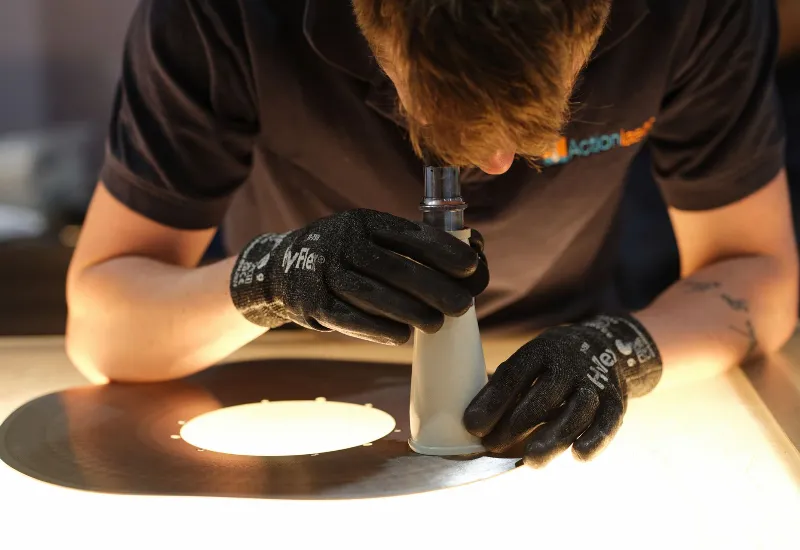
ActionLaser supports industrial processors with durable, micron accurate filtration screens that improve stability, reduce downtime and strengthen overall production control.

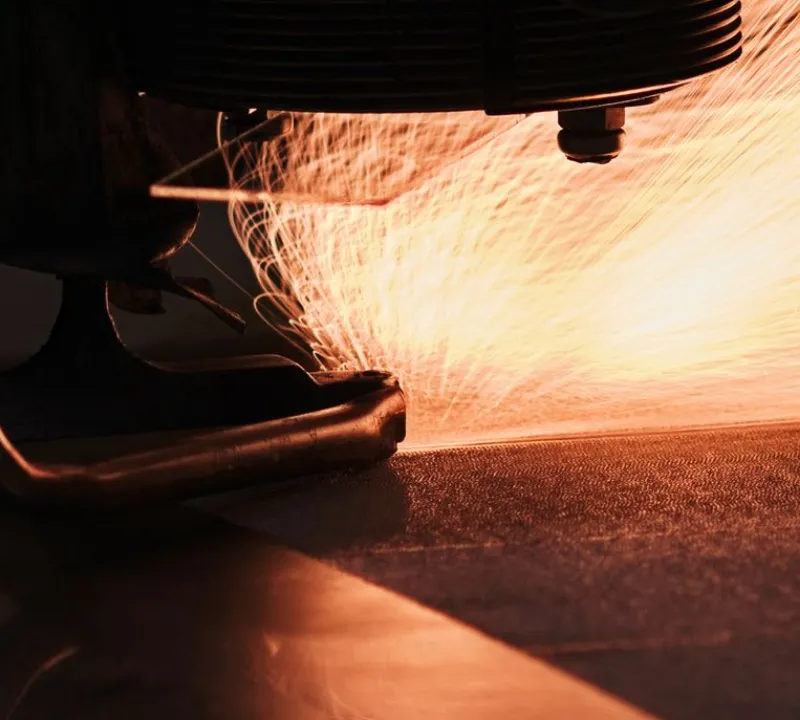
Laser cutting machine cutting a metal sheet with visible sparks during a precision fabrication process.

Precision That Holds Up in Demanding Industrial Environments

Industrial processing places constant pressure on filtration. Chemicals can be corrosive, temperatures fluctuate, particles vary in shape and size, and equipment runs for long cycles.

Traditional mesh and wedge wire screens struggle in these conditions, wearing out quickly or losing accuracy when consistency is crucial.

ActionLaser provides a reliable and premium alternative. Our precision laser-drilled stainless steel screens deliver micron-level accuracy that stays intact even under chemical, thermal and abrasive stress. Whether they are used in continuous centrifuges, pigment grinding or bead drying, our screens hold their shape and performance over long service life. Because every aperture is clean, smooth and consistently formed, processors experience steadier removal of liquids, more predictable flow and fewer unplanned stops.

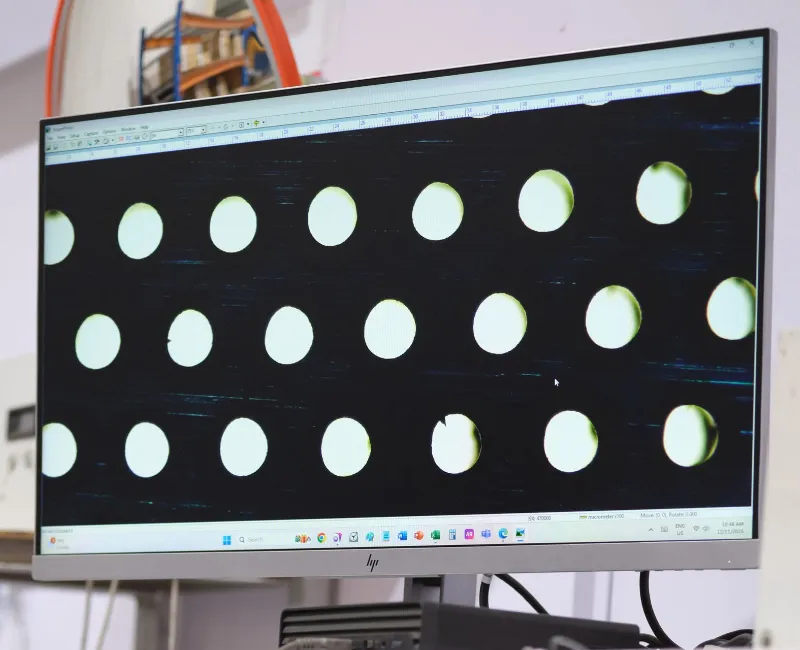
High-magnification image of circular laser-cut holes displayed on a monitor during quality inspection.

Tailored for the Realities of Industrial Process Chemistry

Industrial processes rarely behave the same from batch to batch. Crystal size changes and particle behaviour shifts. Many filtration screens cannot keep up with these variations, which leads to blocked equipment, lost product and costly downtime.

ActionLaser designs filtration screens tailored to meet the actual behaviour of each process. Crystal drying applications can be matched to specific aperture sizes and percentage open area to optimise moisture removal and yield. Fine grinding operations for pigments, inks and dyes benefit from screens that resist wear while maintaining flow stability. EPS bead drying manufacturers rely on our specialised materials, tapered apertures and custom sealing tape to prevent leakage and maximise dryness.

Results and ROI

Industrial processing plants feel the cost of filtration inefficiency immediately. Whether it is crystals retaining too much moisture, EPS beads leaking through worn screens or chemical batches slowing due to blockages, even small inconsistencies can escalate into lost product, and more maintenance.

ActionLaser technology removes these weak points. In industrial chemical centrifuges, accurately specified apertures and controlled open area help producers achieve stronger crystal recovery and more reliable moisture targets. For EPS manufacturers, our screen designs support drier beads, fewer losses and smoother dryer performance. The shift from mesh or ageing metal screens to laser-drilled stainless steel also reduces the cycle of frequent replacements that consume labour, time and budget.

Plants see the return not just in uptime but in predictability. Our stainless steel laser screens maintain structural integrity under corrosion, abrasion and heat, which extends service life and stabilises throughput. And with innovations such as our chemically resistant silicone sealing tape designed for pellet dryers, operators regain hours once lost to sealing, resealing and leak control.

The result is filtration that simply performs – fewer interruptions, cleaner batches, less waste and a smoother, more reliable production line.

Engineered for harsh conditions:

Corrosion and abrasion-resistant stainless steel.

Precision where it counts:

Apertures tailored to each process.

Longer running life:

Reduced maintenance and change-outs.

Proven across applications:

Consistent performance from chemicals to EPS drying.

Laser cutting machine cutting a metal sheet with visible sparks during a precision fabrication process.

Strength, Safety and Service Life that Reduce Total Cost

Industrial processing downtime is costly. Screens that wear out early, need frequent sealant application or require complex installation that slows production and raises operating costs.

In continuous centrifuge applications, tapered apertures maintain liquor removal efficiency over time, reducing moisture and supporting higher recovery.

Longer screen life, reduced maintenance and fewer disruptions create measurable value for industrial processors. The result is a filtration solution that delivers stability, protects operators and improves yield.

laser drilled filtration systems and screens

Custom-engineered perforated screens built to outperform and outlast in every application.

Our filtration systems and screens

Frequently Asked Questions

How do ActionLaser’s stainless-steel filtration screens maintain process stability in high-load industrial plants?
Laser-drilled apertures retain their exact shape under thermal, chemical, and mechanical stress, ensuring consistent flow and pressure throughout long production cycles. This stability prevents product carry-over and uneven separation that can upset downstream equipment. Operators experience steadier throughput and fewer manual adjustments. It strengthens overall production control across demanding environments.
Why are laser-drilled stainless-steel screens preferred over mesh or wedge wire filters for continuous chemical and materials processing?
Mesh and wedge wire filters gradually deform or corrode, which alters flow and separation accuracy. ActionLaser’s precision drilling produces clean, uniform apertures that resist distortion and blockage. The screens last significantly longer and deliver consistent filtration quality. This reduces downtime and replacement frequency while improving product yield.
How does ActionLaser customise filtration screens to match the chemistry and particle behaviour of each industrial process?
Every screen is engineered from real process data, particle size, viscosity, temperature and chemical exposure. Laser drilling enables micron-level control of aperture size, taper, and open area, allowing for precise matching of these parameters. The result is a screen that performs predictably even when feed characteristics vary. Plants gain higher efficiency and fewer filtration-related stoppages.
What performance improvements do processors typically see after replacing ageing filters with ActionLaser’s laser-drilled stainless-steel screens?
Operators report stronger crystal recovery, cleaner liquid separation and fewer blockages in centrifuge and dryer systems. The stable geometry shortens cleaning cycles and improves moisture control, particularly in EPS and pigment applications. Longer screen life lowers maintenance hours and spare-part costs. These gains translate directly into higher uptime and throughput.
How do ActionLaser filtration screens resist corrosion, abrasion and heat in harsh industrial environments?
Each screen is produced from stainless-steel alloys chosen for their corrosion and wear resistance. Because laser drilling introduces no mechanical stress, the material retains full strength and dimensional accuracy. Screens operate reliably through repeated heating and cooling cycles. This ensures consistent filtration performance and extended service life.
How do tailored laser-drilled screens enhance efficiency in EPS bead drying, pigment grinding and other fine-particle operations?
Accurately drilled apertures maintain controlled airflow and particle separation, preventing leaks or over-drying in EPS systems. In pigment and ink grinding, the smooth internal walls reduce residue build-up and support steady flow. Chemically resistant sealing materials further improve reliability and reduce maintenance. The result is cleaner output and a more efficient, stable production process.
Can I choose any steel alloy for my laser drilled screens?
Yes, ActionLaser can drill a specific customer requested steel alloy.