

Stable separation under load
Laser-drilled stainless-steel apertures maintain defined geometry under sustained centrifugal and abrasive conditions.
Laser-drilled stainless-steel filtration screens designed for the specific separation demands of sugar beet and sugar cane processing.
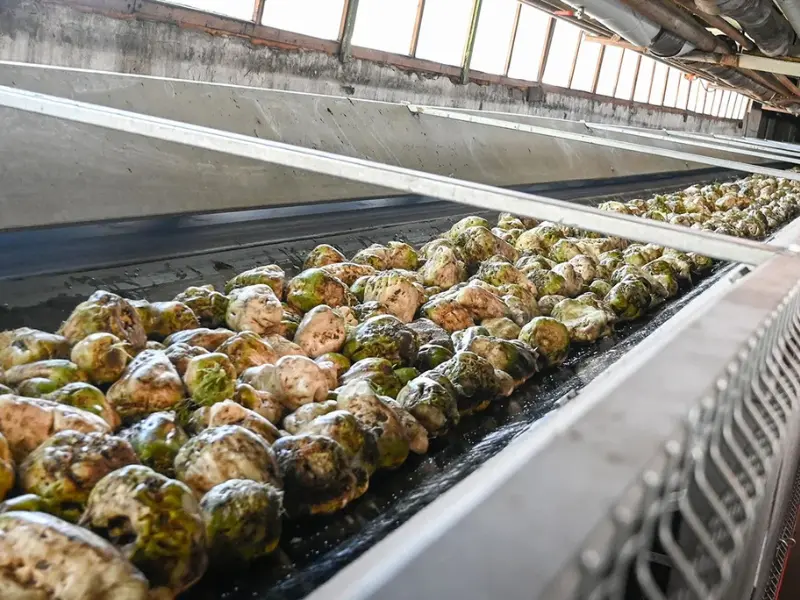
Sugar processing places sustained demands on filtration systems. High throughput, abrasive crystal contact, and continuous mechanical loading mean separation performance must remain stable over long operating periods. Even small changes in aperture geometry can affect moisture control, balance, vibration, and downstream process stability.
These challenges are increasingly relevant as sugar producers push for tighter control and longer operating runs. Traditional chrome-nickel and woven-mesh screens can struggle to maintain dimensional accuracy under load, turning a critical separation step into a frequent replacement point rather than a stable part of the process. For both beet and cane operations, filtration reliability is a critical factor in maintaining predictable plant operation.
Sugar processors invest in ActionLaser centrifuge screens and jigger tubes because the yield return is proven. Our sub-35-micron slot-width centrifuge screens support the finer crystal sizes required in modern beet sugar lines, while delivering consistent performance in cane operations where separation quality directly affects recovery. Improved sugar yield, longer operational screen life, less centrifuge energy consumption and less centrifuge vibration thereby reducing maintenance costs.
The longevity advantage is one of the strongest ROI drivers. Some mills that once changed chrome nickel screens every 6 to 10 sets per season now operate continuously with ActionLaser technology. Others that replaced screens every three weeks have documented service lives extending beyond five years. That shift alone significantly reduces labour input labour requirements, reduces spend and removes repeat stoppages allowing greater mill running time (greater sugar recovery).
These outcomes reflect a clear financial return for producers. Producers in six continents choose our screens for long-term stability, and our technology has attracted more than five million dollars in federal advanced manufacturing support. It works in applications where other filtration options fail, and it consistently delivers precision and reliability.
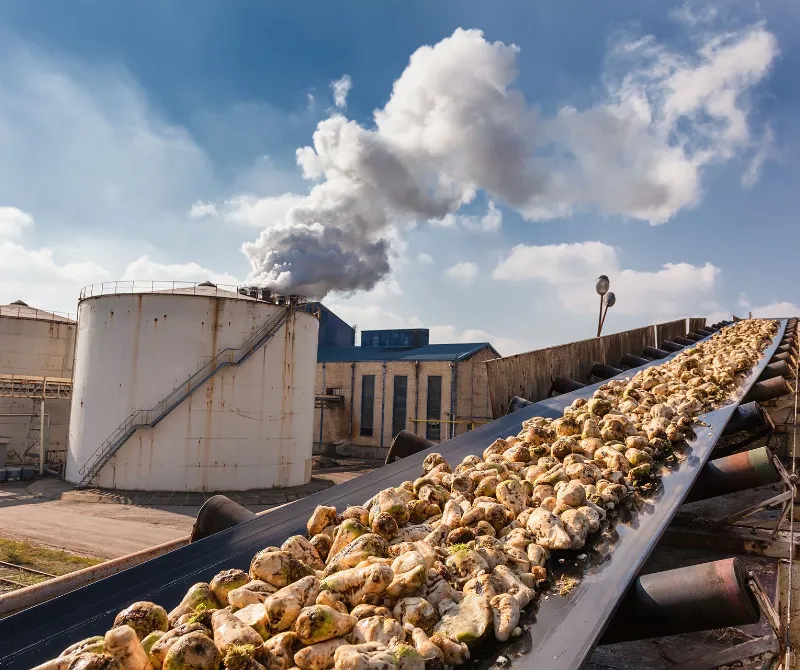
The global sugar beet industry, particularly across Europe, the UK, and North America, has adopted increasingly efficient crystallisation technologies. These systems produce faster cycle times but also generate a higher proportion of very fine sugar crystals. Retaining these crystals requires tighter separation tolerances than conventional screening systems can reliably provide.
In beet sugar centrifuges, slot width, not nominal hole size, becomes the controlling factor for separation. As slot widths approach the sub-35 micron range, even small variations in aperture geometry can allow fine crystals to pass through into molasses streams.
ActionLaser’s work in beet sugar processing focuses on laser-drilled slot geometries manufactured to defined specifications and matched to application requirements. By tightly controlling aperture geometry and material behaviour, our screens are designed to maintain dimensional stability under sustained operational loads, supporting consistent separation performance in demanding beet sugar applications.
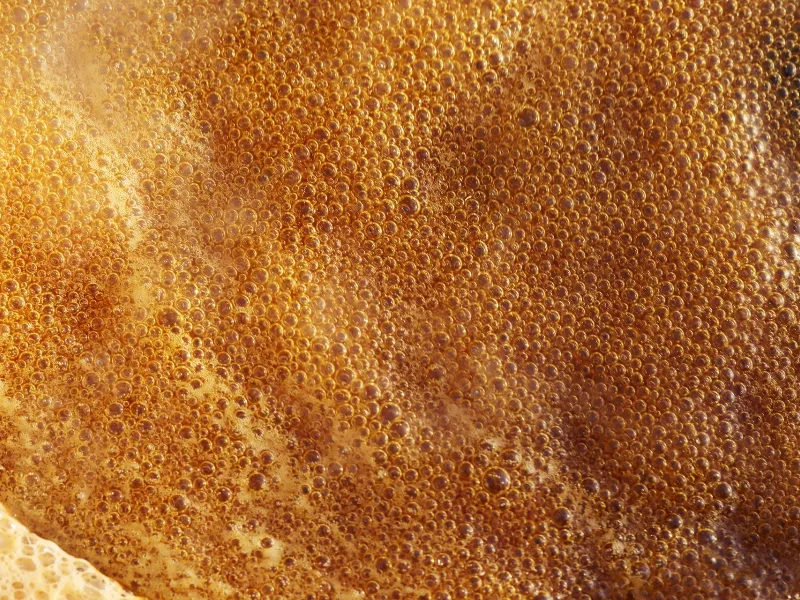
Betaine is a high-value chemical recovered from the molasses stream of sugar beet processing. ActionLaser betaine screens were developed in collaboration with a leading European OEM for use in specialised batch centrifuge applications.
These screens have been supplied to selected sugar beet mills where betaine recovery is part of the production process. Trials were undertaken with European and North American producers to confirm suitability under commercial operating conditions. This work reflects ActionLaser’s approach to collaborative development for specialised beet sugar applications that require precise, repeatable separation.
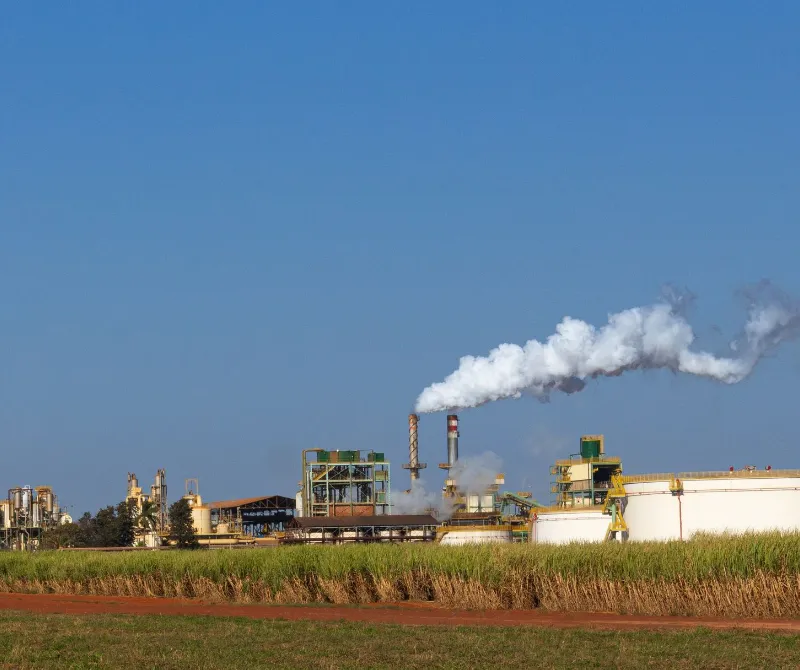
While beet processing demands extreme separation precision, both beet and cane operations share common mechanical challenges. High centrifugal loads, continuous operation, and abrasive materials place ongoing stress on filtration components.
In cane sugar centrifuges in particular, structural stability and vibration control are critical to maintaining balanced machines and predictable operation.
Filtration components that deform or wear unevenly can quickly shift from a control element to a source of vibration and unplanned maintenance.
ActionLaser screens are designed for high-load environments where dimensional stability is required over extended service periods. By maintaining consistent aperture geometry and resisting mechanical distortion, our screens support smoother flow paths and more stable centrifuge operation in both beet and cane processing lines.
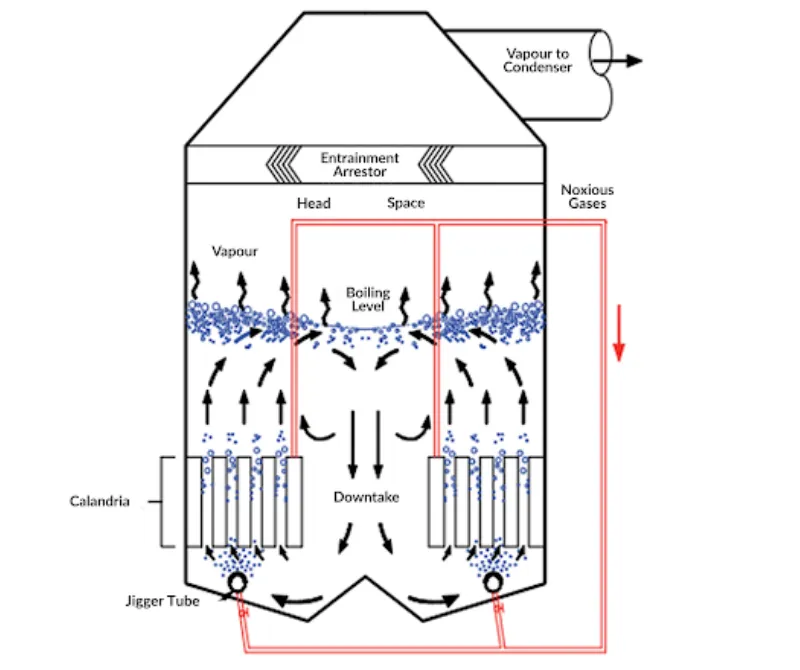
Jigger tubes are used exclusively in cane sugar processing to improve circulation within natural circulation vacuum pans.
An ActionLaser Jigger Tube is a stainless-steel tube laser drilled with more than 100,000 small apertures per metre of tube length. When air and/or vapour is introduced through the tube, fine bubbles are released beneath the calandria, promoting circulation of the massecuite within the vacuum pan.
See link to Jigger Tube brochure
Improved circulation supports more uniform heat transfer and more stable pan operation during the boiling process. The laser-drilled apertures are sized to allow gas and vapour release without allowing massecuite or molasses to flow back into the tube, preventing blockage when airflow is stopped and maintaining consistent performance over time.
The ActionLaser Jigger Tube was developed in collaboration with the Sugar Research Institute (SRI) in 2003 and has since been installed in sugar mills globally as a replacement for earlier jigger systems.

Laser-drilled stainless-steel apertures maintain defined geometry under sustained centrifugal and abrasive conditions.
Slot geometry and open area are manufactured to specification, supporting controlled separation in both beet and cane processing environments.
Rigid stainless-steel screens resist deformation and uneven wear that can affect balance and separation behaviour over time.
Uniform apertures support predictable drainage and flow characteristics across extended operating periods.
Every sugar operation faces changing feed conditions, increasing mechanical loads, and tighter process control requirements as equipment ages and production targets evolve. Across both beet and cane processing, filtration components play a central role in maintaining stable separation, predictable flow, and controlled wear.
ActionLaser centrifuge screens are used across multiple stages of sugar processing, from initial separation through to final crystal recovery. Laser-drilled stainless-steel apertures support consistent drainage and stable operation under demanding conditions. For producers adapting to finer crystal sizes or higher throughput requirements, application-specific laser-drilled screens offer a controlled, reliable alternative to traditional mesh, chrome-nickel, and mechanically punched filtration media.
To discuss laser-drilled screen options for beet or cane sugar processing applications, contact ActionLaser to review separation requirements and operating conditions.

 Inspired by the Australian grass tree - resilient, precise, and enduring - ActionLaser embodies the same strength and renewal that define lasting performance.